Showing posts with label Hardware. Show all posts

Friday, June 06, 2008

No Love for the HP2133 Mininote


Maybe I should have called this post, I Hate Closed Hardware instead.

When I attended Linuxfest NorthWest 2008 I stood before the HP booth and fondled the HP 2133 Mininote. A bit larger and heaver than the EeePC that was in my bag at the time (running Ubuntu Gutsy, thank you very much), but with more of everything (CPU, drive, resolution). It was perfect for my summer of traveling, I convinced myself.

So I ordered one.

In fact I ordered the KX870AT version - yes, the one with Microsoft Windows Vista pre-installed. Simply because I wanted better hardware than what was available for the SLED version - I had no intentions of using Vista on this device (beyond giving it a test).

It arrives, the box is so nice and light - opening it, I love the feel of the hardware, from the keyboard to the brushed metal case. I plug it in and turn it on - thus begins my 5 hour introduction to Vista on the Mininote. There must be some tie at HP, or perhaps a lawyer from MS, that forces this operating system on this hardware - because I can not imagine any technical person alive willing to live with the pain of watching this device crawl with Vista installed (public execution is too good for this person).

Part of my pain was trying to create recovery discs - there simply was no way to do it from the device. The instructions that came with the device, online at HP, were all stating the same thing - use an application that was not installed on the device. I must have fucked up right? A Google later, discovered I wasn't alone - far from it. No problem, I call HP Support. Now I have no beef with the people I talked too at HP Support - but the woman that I finally got wanted me to burn a windows backup and did not seem to understand my request for recovery discs instead. I got a little grumpy (those that know me are shocked right?) and told her just to ship the recovery discs and I'll pay for it - well she did ship them, no charge and I received 3 business days later (seemed she did understand the difference from a backup and a recovery disk after all).

Okay, scrub Vista off this device (spouting shit all the while about the guy who should be shot for making the decision to pair the two together) - lets get back into Linux. I had such high hopes.

I did a little research, seems you have to tweak Ubuntu Hardy to get it installed - no problem. Right? No joy, no graphics acceleration or it craps out something else - have to hack to get the earphone to work and for the life of me I can't figure out why network manager can see the wireless networks but can't connect.

Okay, I'm moaning in pain at this point.

So I don't want SLED, why not see if OpenSuse 10.3 will do just as well - ha, fat chance. Maybe version 11 that comes out in 12 days (from now) - you would think they would incorporate the drivers and configuration right? Geez, I hope so. I will try it again later - after the pain ebbs away.

What the hell is the devices' problem anyways? I blame the closed source, the VIA Chrome 9 (yes they just released open drivers - maybe I have early adapter syndrome) and the Broadcom wireless (someone firebomb their offices for me please).

Anyways, I'm a little bitter about the whole thing - I lost a weekend to this device and its still not to a base level that I'm happy with. I placed it on my shelf and there it sits - having to remind myself that this is what happens when you buy out of lust rather than love.

My recommendation is to stay away from this device, all models - but if you really love the outer shell like I did, to wait to see if the distros better support it or HP makes better decisions on hardware. I've my EeePC, as claustrophobic as the screen and keyboard feel - I'll use it over the Mininote any day.

Wednesday, April 30, 2008

Dell ships to CA


Some time ago I voted on Dell's Idea Storm website. Bring us Linux on the consumer products, give me Ubuntu I voted! Dell listened (thank you!) and started to do limited releases out, what feels like, the back door of their site - but only to the United States but there were promises to (eventually) come to Canada.

Let me get one thing straight - I am not a patient guy.

I tried to order a laptop in the states, ship it to a guy I knew who could use it for a month or two before sending it north - but that fell through. I looked at mail drops south of the border that I could drive south to pick up, just never got around to it.

Then Dell started to ship to Canada. Glory glory.

But, by that time I was pissed at them (and I still have a bad taste in my mouth from my past Dell support incidents), so I sat on it for a while. But like most toys, my head turned and I went back onto Dell.ca and purchased a lower range laptop (maxed out on options of course).

I purchased the Dell Inspiron 1420n. (in red if you must know)


My first impression upon opening the box was how sparse the parts and documentation was. No problem. The unit is a nice 14.1 inch glossy display doing 1440x900, wanted open sourced drivers so left the Intel x3100 video card, 4GB RAM, 160GB 7200RPM SATA drive, Intel Core 2 Duo T5450 1.66GHz CPU. A little lower on the specs that I normally use (mostly on a MacBook Pro now) but since this wasn't intended to by my main system, it should suffice. I think the lower CPU will hurt the most - especially if I start compiling stuff (I tend to play with Gentoo a bit).

Boots fine, resolution is correct, Ubuntu Gutsy Gibbon pre-installed, sound works, suspect, wireless. Good. I see that there is an ISO on the machine with a link on my desktop, okay I burn (two) a DL DVD with the image. The two documents that came in the box were of little help - Product Information Guide was less than helpful and the Owners Manual that was written for Windows XP users. Nothing telling me how to restore, that I should burn the ISO - nothing. 3D acceleration is not turned on - something about Compiz Fusion not supporting the chipset (but there is an easy fix, see below).

Since all was working and because I can't just use a distribution if a new version is available - I do a network upgrade of the operating system to Ubuntu Hardy Heron. Sound and the modem breaks - but luckily I found (though the Ubuntu Forums) an online Dell support wiki (definitely bookmark this page). Site also includes links to drivers and the reinstall ISO images. The upgrade fixed the 3D acceleration problem.

I've only had the laptop for a day, so I can not give you a detailed review of using it - but it feels like a good piece of kit, sturdier than my prior Dell laptops one that I expect to get full use of in the coming months.

Saturday, December 15, 2007

Asus Eee PC 701 Review


I will admit that I had not heard any of the hype associated with this device until I read an online article - a quick check of my preferred corporate vendor, a couple clicks, and ordered. I received two days later.

The Asus Eee PC 701 is very very cool - I am extremely thrilled with this new device and have yet to wet my appetite for tweaking it. Having purchased the Nokia N800 as well as the earlier Nokia 770 I only used these devices sparingly - usually on a business trip. The Eee PC is a full Linux computer with the Xandros distribution installed on a Intel chip. What this means is that I can easily change the software on this device to suite my needs (or desires) - more on this.

I took it out of the box at work but had no time except to plug it in and turn it on to answer the couple questions needed before I had to turn off. I got home that night and my wife immediately grabbed it, was playing most of the games that came with it for over an hour - telling me this could replace the Nokia 770 that she had been using at her work, for purchasing and surfing, etc. She obviously saw the immediate use of this computer as well. I only got my hands on it late that first night and immediately started to dig further than the Easy Mode would allow me.

The hardware for the Eee PC is extremely small - I had read the reviews, watched a clip or two online and I was still not prepared for just how light and tiny this thing is. Many of my hardcover books I port around are heavier than this computer. The next thing is the keyboard - with my fat fingers I can not comfortably type on it, so that is a negative (on my fat fingers, I won't sacrifice size for this laptop because of a larger keyboard). And the everything just works as expected for a laptop running Linux - standby power, wireless, sound, touchpad, etc.

Since this is Xandros Linux, a Debian based distribution as well, I quickly became hungry for more - knowing it could do more. I found this site which had a great wiki. A couple minutes later and my default desktop environment is running KDE with the Full Desktop (Advanced) Mode. I installed VLC, copied a couple full mp4 movies to a 4GB memory stick and off I go - full screen my video worked great!

I don't doubt that my Eee PC will be running Gentoo or Ubuntu in the next day or two, as I've only just begun playing with this fantastic device.

Wednesday, December 05, 2007

Zareason HomeBox Review


After the positive experiences of purchasing a Linux laptop from this small company, I emailed Zareason to see if they would customize their HomeBox for me.

What I wanted was a stripped down machine with a second network card as I wanted to use this box as my gateway at home. The box (or cube) is beautiful, a small silver computer that tucks neatly into my shelf and does the job I intended perfectly.

I ordered the box with two 250 GB drives, 2 GB RAM and (of course) 2 NICs. Runs like a dream. Plug in an external 1 TB Lacie drive and I have a gateway as well as a public file server. This beast is now doing so much that I rely on it for my home LAN.

The only negative I had, not of the hardware or the company but of my configuration, is that I used Ubuntu Server rather than my usual Debian installation. But thats for another posting.

For the company and for this hardware, I highly recommend the both of them.

Zareason MegaLap Review


During Ubuntu Live 2007 one of the exhibitors was a small company called ZaReason. They had a host of systems on display but the one that caught my eye was the MegaLap running World of Warcraft with Compiz (it was running with Wine but what really caught my eye was the ability to move between desktops and task switching effortlessly).

This laptop is a generic Asus Z84J - 17" LCD display, 2GB RAM, NVidia Geoforce 7700, 160 GB 7200 RPM drive. The hardware is great. It comes pre-installed with Ubuntu Linux.

There is no bells or whistles with the product (though it does have stereo sound), you get stock parts with a stock Ubuntu install. The company is small but friendly and delivers as promised.

I do recommend this option for those looking for a pre-installed Linux laptop, if you want something besides a Dell (still not available in Canada) or a System76 machine.

Wednesday, March 07, 2007

Review: Lenovo ThinkPad X60


As a long time Thinkpad user, my vendor convinced me to try the Lenovo ThnkPad X60 Tablet out (I didn't make it very hard for him).

The short and dirty specifications are:
  • Intel Core Duo processor L2500 1.83
  • 80 GB hard drive
  • Gigabit ethernet
  • Bluetooth
  • Intel Pro/Wireless 3945ABG
  • 12.1" screen at 1400x1050x32 resolution
  • 2 GB RAM
The first thing that I notice is the weight - not even 4 pounds, easy to hold in a single hand. And portability, for me, is crucial. The next thing I notice is the size, this guy is small. Nice so far.

It has the standard Lenovo buttons, thumbpad reader, and a few new things. For one is the swival that allows the LCD to spin and close backwards - leaving the screen up like a thick book. Another button allows you to spin the screen contents around to the four arcs, choosing how you want to use your tablet when it is open like this. I have to use an external USB DVD/CD drive - no space inside - I don't mind.

I haven't even turned it on and I like it.

Windows XP comes up (ah well, nothing is perfect right!), I go through the usual questions, fingerprint authentication, etc. All good. I'm left with a ThinkPad laptop. I then spin the screen around and try out using the pen, which gets some getting used too! This is a different operating system than I'm used to with Windows, a few extras show up and I realize (ya, I know, I'm clueless) I am using Windows XP Tablet PC Edition 2005. The Input Panel is nice, intuitive.


Okay, so I get bored easy. I've that single corporate license of Windows Vista Business laying around and I read (somewhere) that the tablet features are now incorporated into this version of their latest desktop OS. Out goes XP, in goes Vista.

Installing the Lenovo software was easy, just install the ThinkAdvantage System Update. I picked and chose what I wanted (I think the Lenovo ThinkPads come with too much crap anyways). It ran better than my previous foray into Vista and it is still running (okay, its been only 3 days, but that is 1 more than my previous attempt).

The tablet features on Vista are marginally better than XP but overall slower.

I am going to give it a try for the next while - Vista on this tablet (if only to see how the un-enlightened live).

Sunday, February 11, 2007

Review: Nokia N800

In an earlier blog post I reviewed the Nokia 770 Internet Tablet. Nokia has come out with a new version in January and I promptly ordered the Nokia N800 Internet Tablet for myself.

This sexy little device is what the 770 should have been. With updated memory, new OS version and some exciting new features - this is the device that I wanted when I purchased the earlier version.

I took my family to Disneyland this last couple weeks, while there I left all the laptops and (most) peripherals at home - I took the Nokia. Sitting in the hotel, around the pool - surfing on the Nokia, playing a simple game or two - this device shined. It was great. I even listened to streamed radio and stuck a few MP3s on the memory card. Daily I kept abreast of what was going on in the world by syncing the RSS feeds I like.

Here are some of the highlights for the hardware:
  • Weight: 7.27 ounces
  • Size: 2.98x5.7x0.5 inches
  • Display: High resolution 800x480 pixels
  • Memory: 128 RAM (2 memory card slots)
  • Networking: 802.11b/g WLAN, Bluetooth 2.0, USB 2.0
I purchased the 770 after it had been on the market for some time - there was plenty of add-on applications to throw on it. The N800 does not yet have much from the FOSS community - it is simply too new. What comes included is pretty good. Skype announced that they will port their application to the Nokia N800 early this year - I'm anxious for its release.

No regrets on purchasing this device - it simply is a great little tool.

Sunday, January 21, 2007

Review: System 76 Gazelle Performance

I received my System76 Gazelle Performance laptop in November. Since the first day I received the laptop, it has become my primary machine away from the office.

Lets look at the statistics first.


Display: 14” Widescreen WXGA (1280X800)
Graphics: 128 MB nVidia Graphics
Sound: Intel High Definition Audio
Networking: 10/100/1000 (LAN)
Wireless: Intel 802.11 abg
Card Reader: 4 in 1 Card Reader
Expansion: PCMCIA 2.1 supports one Type II
Ports: VGA, 4x USB 2.0, Mic In, Headphone Out, FireWire 1394B, S-Video
Webcam: Integrated 1.3 Megapixel Camera
Battery: 6 Cell Lithium Ion, Extra 9 Cell Lithium Ion
Battery Life: 3 Hours, and 5 Hours
Dimensions: 13.15" x 9.9" x 1.4" (W x D x H)
Weight: 5.5 lbs
Processor: Core 2 Duo T7200 2.0GHz 4MB 667FSB
Memory: 2 GB DDR2 667 MHz
Hard Drive: 80 GB 7200 RPM SATA
CD/DVD Drive: CD-RW / DVD-RW


We are talking a nice laptop regardless of the OS installed - but the laptop comes with the excellent end-user Linux Distribution Ubuntu Edgy Eft! System76 takes this a step further and integrates the OS with the hardware to create a very nice symmetry. Out of the box, everything but the built in camera works and has default applications installed. Some of these applications are different than the default Edgy choices - but all is good (or better!).

First thing I did after receiving my laptop was to scrub it, repartition and encrypt the home partition. Next I reinstalled the OS back to System76 factory defaults. Finally I started to install additional software that I would like to use - ruby, mysql, emacs, thunderbird, debug packages, restricted formats, etc.

Through work I have used numerous laptops over the years. The System76 machine comes somewhere between an IBM Thinkpad and the Dell Latitude for hardware quality (the Thinkpad at the higher end of the scale). It is a solid design - with a good number of usable ports - with ease of access keys, moderate weight and LCD that does not bounce around as I type (as do most of the Dell laptops that I have used). Hibernation and suspend work, sound, wireless - its all good.

As always there are a few things I am not crazy about with any piece of hardware (or software), this laptop is no exception. My largest grumble is that I have yet to find good settings for the touchpad sensitivity, so when I am typing away my focus will move to wherever my mouse caret is located. Not sure if I can blame System76 for this - but it is the largest pain in my ass with this machine (so that is really not so bad). The next complaint is that the camera is not yet supported - but has been promised since (at least) Feb 2006 (where I saw a forum message saying 'soon') - I want to use Skype with video while roaming! The last piece is restoring from hibernation, it is a 50/50 chance that you will not be able to restore to any wireless network - more than a little frustrating.

Overall my satisfaction is very good (better than the IBM Thinkpad T60 that I was using). I am in Linux, it all works and I'm happy. What else could I want?

Oh ya, I bought a System76 Koala Mini Performance because of this laptop and the service this company gave.

Saturday, December 16, 2006

Review: Nokia 770 Internet Tablet

About a month ago I received my Nokia 770 Internet Tablet. For those not in the know, it is a portable device allowing easy web surfing, email, multimedia and even phone access. What drew me to this device was not this list of items, but that it ran Linux under the hood - specifically the Debian distribution.


Before I get into it, here are the highlights.


  • Weight: 8.1 Ounces

  • Size: 5.5 x 3.1 x 0.7 inches

  • Display: 800x480 touch screen with 65,536 colours

  • Memory: 128 MB Flash (holds a RS-MMC expansion card)

  • Networking: 802.11 b/g WLAN, Bluetooth, USB 2.0


To start, the tablet feels well made, heavy for its size and not delicate in the least. It has a hard shell that slides off exposing the screen and the buttons on the left. The stylus is hidden in behind and is easily retrieved (if you are right handed). The screen has good resolution and you can control the brightness setting (which will help with battery life). It is a little big for your back pocket, but it will easily fit into your shirt sleeve or backpack side pocket. I hated the 128 MB memory limitation and purchased a 2 GB RS-MMC card which gives me more virtual memory and a location for new applications and documents - now I have space to put that movie that I may want to watch. Battery life is outstanding - the Nokia site gives 3 hours of browsing as the average, I've pushed this to 5. Maybe I've just gotten lucky, but I doubt it as I've never had good luck with batteries. When I put the device on standby, it comes right up with plenty of juice to spare.

The connectivity is very good. WLAN supports WPA2 and you can surf at any public wireless location. Getting connected is easy - with a small icon on the top right telling you if you are connected or not - and if not, simply click on it to search for all the exposed wireless locations near you. And if at home, you can save your favourite connections and they will start whenever you open an application that needs network access. I installed Aircrack-ng just to see what type of things I could do - this device is fully functional I assure you.

Using the applications that came with the device - surfing, email, instant messaging, RSS reader and a couple multimedia applications - I found all were more than acceptable, but not outstanding. I suspect this has more to do with the low memory footprint than the choices Nokia had installed. No worries, it has a friendly means to add more software. But the good thing is, since the device is Open Source it is possible to get a large number of applications for the device, or if you have some time, compile them yourself. For example, I installed osso-xterm so I could drop to shell and see what the device had on it - this is just your basic Linux distribution under the slick outer shell people.

The responsiveness of the tablet is poor - it can barely do more than two user applications at a time and if you use more, the responsiveness is somewhere between frustrating to infuriating. Using a single application is fine - even when that application is large like FreeCiv, which has a port for the Nokia 770 available.

After a month of playing with this device, I am unsure how to best utilize it. I mean I have a Linux laptop that goes everywhere I do - do I really need another device. And if I did, it better have something my laptop lacks - which the Nokia 770 doesn't. I read the reviews before purchasing and will have to agree to the medium grade that was given. There is no doubting the coolness factor in the tablet but I just don't see myself pulling it out enough to warrant the price.

Friday, December 01, 2006

Review: Palm Treo 650 Smart Phone

I've put off on reviewing this for a while as this device left a bad taste in my mouth - but I thought I better write something before they are discontinued!


The Palm Treo 650 Smart Phone (mine is GSM) has some of the following specifications:

  • Palm OS v5.4

  • Intel™ PXA270 312 MHz processor

  • 22 MB user-available memory

  • 11.3 x 5.9 x 2.3 cm in size

  • 178 grams in weight

  • 320 x 320 resolution with 16 bit colour

  • Colour TFT touch-screen

  • Supports SD, SDIO and MultiMediaCards

  • 0.3 megapixel digital camera at 640x480 and 2x zoom

  • bluetooth

  • other odds and ends


This is the first smart phone that I've used, coming from my much beloved Motorola Razr V3. I found, caring around my Razr as well as my Palm Tungsten T5 was cumbersome, at least with regards to the numbers of devices I carried (consider that I always have a laptop and numerous peripherals as well).

As a phone, the Treo 650 is adequate. Using a bluetooth headset eased the pain of using the device directly. The call logs were limiting. The dialer was good. The contacts were too difficult to navigate (I must have over a 1000, organized by category of course). Using it to send a text message was the only positive thing about this phone.

As a PDA this device was below average. The memory is wholly inadequate (I purchased a 2 GB SD card). The screen size too small for reading eBooks. Some of the frequently used functionality from my Tungsten T5 was missing. With the keyboard on the device, it was missing the virtual keyboard and handwriting (which I prefer to use).

Overall I dislike the Treo 650 and will be tossing it to one of my Network Administrators as soon as I can. In fact, with Palm moving to Windows Mobile I shall not be using another Palm in the foreseeable future. It is cumbersome in size and weight and thus have been forced to realize that a good PDA and separate phone is not such a bad thing.

Saturday, November 11, 2006

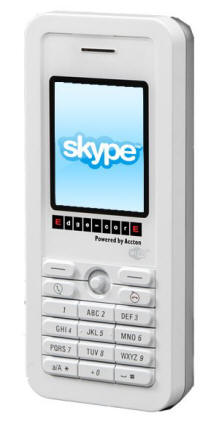
Review: Edge-Core Skype Phone


I wanted something separate from one of my machines while still giving me access to my Skype calls. Doing some searching online I found a handful - but reading the statistics, I settled on the Edge-Core Skype Phone.

Wherever there is an available wireless connection, including WPA/WPA2 encryption, this wireless device gives me access to all things that I need with Skype. This includes the following services:
With a wide screen, easy to access buttons (perfect for my large fingers), light in weight and small in size - this device is perfect for throwing in my bag to go where I want to go. I can manage my account, my contacts and even do my frequent conference calls.

At home I leave this phone on, using my personal wireless network, so that I can phone out or access calls. As a road warrior, sitting at a tea shop, I just search for a strong open network to attach too and then I am available for calls again. All this without turning on one of my machines.

If there are any negatives with this product is that the receiver is poor and it can be hard to hear in a loud environment. When this is a problem I just plug in a headset and I'm good to go.

This is the only Skype phone I've tried but I think I picked a winner my first time out!